A Silent Client Is Not Necessarily a Happy Client

Are You Holding Silent Clients in Contempt?

Do you think that a client who patiently waits for you to get work done for them without complaining is a happy client? In a world with lots of squeaky wheels and more demands than can be met, we treat the silent client with some contempt. In practice we may let their work slip further and further behind. Our thought processes seem to say, “Well, if they think this is important or urgent, they will let me know.” But this is willfully ignoring the facts about silent clients.

Beware-Silent-CustomerMany people do not like confrontation or conflict. They avoid complaining, or even appearing to be demanding. But, they are not necessarily happy with your service and they do not forget. Few people are masochists. The next time they need your services they will very likely be off to another provider who they hope will be more responsive and honest with them.

Now You Have Lost a Client and Finding the Replacement is Ten Times the Cost of Keeping One You Have Continue reading

Mastodons and Customer Relationship Management

What might mastodons have to do with Customer Relationship Management?

In a recent discussion with the leadership team of a small engineering firm I listened as they reported on their progress working with a medium size firm on the second project they had worked on with a third coming down the tube. It struck me that they had progressed to a new phase in their marketing and sales work. They had finally reached the point where they are experiencing repeat business from larger firms. They occupy a fairly narrow niche in the engineering world, but they had found several customers for whom their services are now being called on with regularity.

mastodon and neolithic hunters borrowed from http://gatesofvienna.blogspot.com/2006/07/men-of-north.htmlI asked more questions about how they were thinking about these customers. Continue reading
Critical Element Missing from Fast Company 3M Article on Innovation

Fast Company published an interesting article about an old story, 3M’s innovation culture yesterday, “How 3M Gave Everyone Days Off and Created an Innovation Dynamo” by Kaomi Goetz. The article repeats the well-known story of 3M’s policy of giving employees time to develop new ideas.

There is a critical element missing from this story.

Business Unit Managers at 3M are required to generate a rolling average of 20% from new products year in and year out. If they fail, their business unit is dissolved and the products rolled into someone else’s business unit. This drives business unit managers to continuously look for new ideas and invest in them. It is difficult to create new ideas, even harder to bring them to market. This policy drives the organization to make this critical step happen.

Why Should You Develop a Business Plan for Going Concern, How to Do It, and How Do You Convert the Plan Into Action?

Why Should You Develop a Business Plan?

For every startup the development of a business plan is a  required first step. It is so obvious – business schools have course on writing the business plan and it is impossible to get funding without one. Teams coalesce around the labor. So, every startup has a business plan.

For the going concern, the ones that are now three or so more years old, the business plan (also called strategic plan -really the same thing) is forgotten, only stumbled on when a move forces someone to pick it up and wonder, “Should I just relegate this to the dumpster?”

This is not a good situation. A business without a plan is like a boat sitting in a pond just waiting to sink to the bottom for nature to compost it. Or, if it has the fate to be afloat in a stream, it will be carried along willy-nilly until it bumps into a stone or dead branch or reaches the ocean where nature will also send it to the big composter.

Every business exists in a world that is changing and filled with opportunities and threats. Your business plan is your set of oars to provide the means to pull in the direction you want to go in, to avoid the rocks. You might even row to shore and portage around the falls, to move to an entirely new river.

But, many people, even accepting the wisdom of having a plan, find it a painful exercise, all too easily avoided. This may be driven by the idea that a business plan involves dozens of pages of writing, lots of spreadsheets with numbers they really don’t believe (sometimes don’t understand). Business plans, strategic plans, these are just the exercises one does in business schools. Or it may be the folk wisdom that business plans are not a useful part of managing and they always end up on the shelf or hidden in a file cabinet only dusted off for display when in search of a bank loan.

However, shift your thinking to view the process of building a plan as a value in and of itself, and adopt a simpler more flexible business plan model you will find that building that set of oars for your little boat is fun and productive. Continue reading

Old Technology Displaces New Technology

In a recent coaching session, a long-time client expressed frustrations at keeping track of all of his day-to-day tasks, especially the little items of following through with people he had met. He felt that lots of useful new and old contacts were languishing because he had not followed up on items brought up during a discussion or emails. They are falling through the cracks.

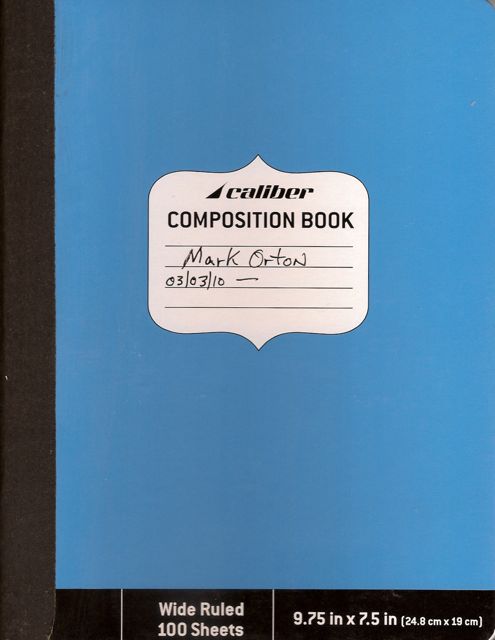
So, I asked him, “How do you keep track of your daily work?” “Well, I still have a Palm Pilot in working order. I enter stuff there.” Clearly this was not working. We kicked around different ways of keeping a task list up to date. Then, I recalled how I solved this same problem for over twenty years. I kept notebooks that I carried around with me and entered notes and tasks chronologically page after page.  Knowing that my client was old enough to predate PDAs and other such devices, I asked him whether he had ever used notebooks.Notebook technology for task/priority lists “Of course. I kept everything in notebooks. Each was carefully dated and then filed away when every task in it had been completed.” I shared my memories of using notebooks. Even odd moments when a co-worker would come to me to ask what i recalled of a meeting that had taken place months earlier and I dragged out my notebook form that period and found the pages with my notes of the meeting.

My client agreed to try out a notebook as a way of attacking his current problem. There is something very satisfying about putting an arrow in the left column indicating a task or date to be reserved and then, later,putting big check mark next to it with a date when a task is accomplished.

Shortly after wards, it came to me that I was not doing all that well my task list technology (Google Tasks in the calendar), so I have returned to this device that served me so well for so long.

The 6 New Management Imperatives by Bruce Temkin – comments

Bruce Temkin has published a free book on his blog ((experiencematters.wordpress.com)), The 6 New Management six management imperatives bruce tempkinImperatives – Leadership Skills for a Radically Changed Business Environment. Mr. Temkin sets out to define a “new set of skills” for managers. These are the 6 new imperatives:

  1. Invest in culture as a corporate asset
  2. Make listening an enterprisewide (sic) skill
  3. Turn innovation into a continuous process
  4. Provide a clear and compelling purpose
  5. Extend and enhance the digital fabric
  6. Practice good social citizenship

Lists like this one are very popular. I have been known to make lists of key practices and the like. But for the practicing manager lists are frequently tough to integrate into day-to-day work. Mr. Temkin’s six imperatives falls into this problem category. Overall, the six imperatives are reasonable enough as they stand. But I want to take a closer look at each and then suggest a more global approach. Continue reading